What an Emergency Order Means in Florida Restaurant Inspections
An emergency order is Florida's strongest restaurant inspection action. Here's what it actually means, what usually triggers it, and how a restaurant reopens.
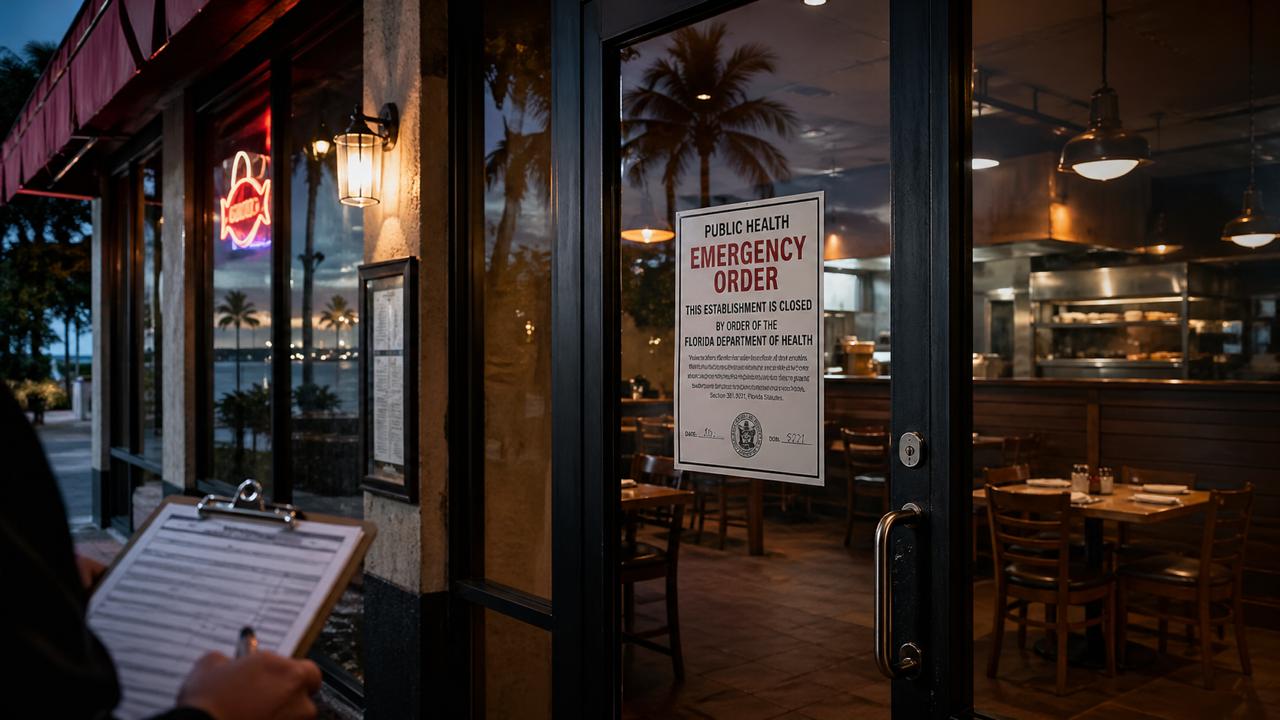
When people see Emergency Order Recommended or hear that a Florida restaurant was ordered shut, they usually assume the same thing: this place must be done for good.
That is not usually what it means.
In Florida, an emergency order is the strongest immediate action in the restaurant inspection system, but it is still a very specific kind of action. It is not the same as a permanent shutdown. It is not the same as a fine. And it is not just another failed inspection.
It means inspectors found a condition serious enough that the restaurant could not keep operating safely that day.
If you are new to the system, start with our full How It Works guide and What Happens When a Florida Restaurant Fails an Inspection. This page is the narrower, higher-stakes version: what emergency action actually means when DBPR uses it.
An emergency order means DBPR believed the restaurant had to stop operating immediately.
That does not automatically mean the restaurant is gone forever. It means the conditions were serious enough that Florida's inspectors treated them as an immediate public-health or safety problem, not something to fix gradually over the next routine cycle.
What Florida Means by an Emergency Closure
Florida DBPR is unusually clear on this point: an emergency closure is not a disciplinary action. It is a protective one.
The state describes emergency closures as actions taken to mitigate conditions that pose an elevated risk to the health, safety, or welfare of the public or the establishment’s employees. In plain English: the restaurant is being stopped from operating because the risk is too high to ignore right now.
That distinction matters.
A restaurant can have a bad inspection, get a warning, and stay open. It can even collect multiple serious violations and still get a callback instead of a closure. An emergency order is different. It is what happens when the conditions cross the line from unsafe to cannot continue operating.
What Usually Triggers an Emergency Order
According to DBPR’s public-records guidance, the common examples are the kinds of failures that make safe food service impossible or unreliable:
- no approved utilities or no hot water
- sewage backups or overflows
- fire damage
- severe pest infestation
- inadequate refrigeration
These are not cosmetic issues. These are the kinds of problems that break the basic conditions a kitchen needs in order to operate safely.
This is also why diners should be careful about assuming every shutdown is about “dirty food.” Sometimes it is. Sometimes it is more about infrastructure failure — plumbing, water, refrigeration, utilities, or physical damage to the facility.
What an Emergency Order Does Not Automatically Mean
This is where people usually overreact.
An emergency order does not automatically mean:
- the restaurant is permanently closed
- the owner lost the business forever
- every meal ever served there was dangerous
- the restaurant will never reopen
- the restaurant is under the same kind of process as a long disciplinary case
What it does mean is that the restaurant was not allowed to keep operating until the critical problem was corrected.
That is still serious. Very serious. But it is more precise than the internet’s usual version of the story.
How a Restaurant Reopens After an Emergency Order
This part is important, because it is where a lot of readers misunderstand the timeline.
DBPR’s enforcement guidance says a 24-hour callback inspection will be performed after an emergency closure or emergency suspension of license. But that does not mean every restaurant reopens the next day. It means the state moves quickly to re-check the establishment once emergency action has been taken.
The key threshold is whether the critical violations that caused the suspension are corrected.
If they are corrected, the restaurant may reopen.
If they are not corrected, the restaurant stays closed.
So when you see a restaurant that was shut down and then reopened, that does not mean the original closure was overblown. It means the emergency condition was serious enough to require an immediate stop, and then serious enough to require a verified correction before reopening.
Why Emergency Orders Matter More Than a Normal Failed Inspection
Florida’s inspection system is built around risk-based inspections, and most establishments get between 1 and 4 unannounced inspections per year depending on their risk profile. Most inspection outcomes are nowhere near an emergency order.
That is why an emergency closure carries so much signal.
It is not just another bad score. It is not just another callback. It is the point where the state stopped treating the problem as something to monitor and started treating it as something that had to stop immediately.
If a restaurant later reopens and operates cleanly, great — the system worked. But from a consumer perspective, an emergency order should make you slow down and read more carefully:
- What was the condition for closure?
- How quickly did the restaurant reopen?
- Was the issue infrastructure-related or food-handling-related?
- Does the restaurant have a longer pattern of high-priority or repeat violations?
That last point matters a lot. A single emergency action is one kind of story. An emergency action layered on top of repeat problems is a different one.
If you want to understand why repeated findings change the context so much, read our separate guide on why repeat Florida restaurant violations matter.
What You Should Check Before Eating There Again
If a restaurant you like has been the subject of an emergency order, do not rely on gossip, screenshots, or Facebook comments. Check the record.
Here is the smartest way to read it:
- Read the closure reason first. The condition for closure tells you whether this was a plumbing/utility breakdown, severe pest issue, refrigeration failure, or something else.
- Check whether it reopened quickly. A fast reopening can mean the issue was corrected quickly, but you still want to know what actually happened.
- Look at the next inspection results. The follow-up tells you whether the immediate condition was cleared.
- Look for repeat patterns. One emergency order is serious. Repeated high-priority failures around it are worse.
- Use context, not panic. The point is not to sensationalize. It is to understand whether the restaurant recovered cleanly or just got back on its feet after a narrow fix.
You can use our weekly shutdown coverage, Food Safety page, and How It Works guide to read that history faster.
The Bottom Line
An emergency order is the closest thing Florida’s restaurant system has to saying: stop now, fix this first.
It is not automatically permanent. It is not automatically a moral indictment. But it is never routine.
If DBPR uses emergency action, it means the state believed the restaurant could not safely keep operating under the conditions inspectors found that day.
That is exactly the kind of signal diners should take seriously.
Want the full picture?
Use InspectFL to search any restaurant, read inspection history, and see whether a shutdown was an isolated emergency or part of a longer pattern.
Frequently Asked Questions
What is an emergency order for a Florida restaurant?
It is an emergency closure or license suspension issued by Florida DBPR when inspectors determine there is an immediate threat to public health, safety, or welfare.
Does an emergency order mean the restaurant is permanently closed?
No. It usually means the restaurant must stop operating immediately and cannot reopen until the conditions that caused the closure are corrected and verified by DBPR.
What usually causes an emergency closure in Florida?
Common triggers include no approved utilities or hot water, sewage backups, fire damage, severe pest infestation, or inadequate refrigeration.
How fast can a restaurant reopen after an emergency order?
DBPR says a 24-hour callback inspection will be performed after an emergency closure or emergency suspension of license, but reopening still depends on the restaurant correcting the critical conditions that caused the action.
Is an emergency closure the same thing as a disciplinary action?
No. Florida DBPR says an emergency closure is not a disciplinary action. It is an immediate protective action taken to reduce an elevated risk to public health, safety, or welfare.
If you want the broader trust and methodology pages behind this article, visit how to read Florida restaurant inspection results, our editorial standards, corrections policy, and about InspectFL.
Related: How It Works · Food Safety · What happens when a Florida restaurant fails inspection · Understanding Florida inspection grades
📬 Want this in your inbox every Monday?
Florida's cleanest and dirtiest restaurants. Currently free.
Want to check a restaurant?
Search any Florida restaurant's inspection history and grade.
Search RestaurantsMore from Behind the Kitchen Door
Why Repeat Florida Restaurant Violations Matter
Learn how to read repeat Florida restaurant inspection violations, callbacks, and patterns before deciding where to eat.
Aug 9, 2026
7 Florida Restaurants With a Next-Day Clean Callback — and Rough Overall Grades
InspectFL reviewed Florida DBPR records to find seven restaurants with emergency-related inspections, 5+ high-priority findings, and a zero-finding complied callback within one day. Most still have C or F overall grades.
Jun 9, 2026
What Happens When a Florida Restaurant Fails an Inspection
Florida restaurants can have a bad inspection and stay open the same day. Here is how the DBPR system actually works and what diners should check next.
Apr 19, 2026

Join the discussion
Seen this place in person? Share what stood out — cleanliness, food handling, service, or whether the inspection record matches the real experience.
Add your take in under a minute
Sign in once, then comment, reply, and save restaurants to your watchlist.
Enter the 6-digit code sent to
Helpful comments beat hot takes.
Loading comments…
No comments yet — be the first person to add useful context.