What Happens When a Florida Restaurant Fails an Inspection
Florida restaurants can have a bad inspection and stay open the same day. Here is how the DBPR system actually works and what diners should check next.
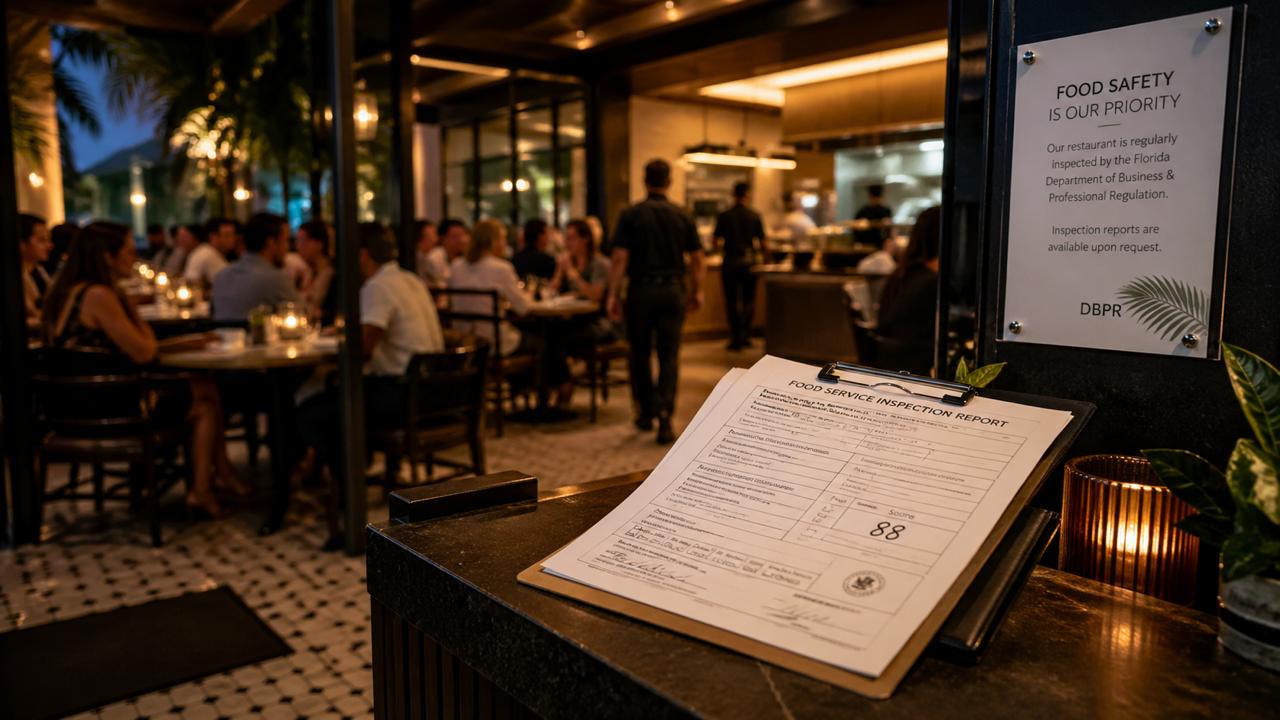
A lot of people assume a failed restaurant inspection in Florida means one thing: shut it down.
That is not how the system usually works.
In Florida, a restaurant can have a very bad inspection and still stay open while it corrects the problems inspectors found. That does not mean the violations were minor. It means the state usually treats most inspection failures as issues that need correction and follow-up — not automatic closure.
That is the part diners often miss. The public hears “failed inspection” and imagines a restaurant instantly going dark. In reality, the next step is often more procedural: warning, callback, reinspection, or escalating enforcement depending on what was found and whether the restaurant fixes it.
If you are new to the system, it helps to separate two different questions:
- Was this inspection bad?
- Was it bad enough to force the restaurant to stop operating immediately?
Most of the time, the answer to the first question is yes and the second is no.
This guide is the broad explainer: what people mean when they say a Florida restaurant “failed,” what normally happens next, and how to tell the difference between a one-off bad inspection and a restaurant with a real pattern. If you specifically want the highest-stakes version of the story, read our separate guide on what an emergency order means in Florida restaurant inspections.
A bad inspection usually means “fix this and come back,” not “close forever.”
That still matters. A restaurant can stay open after serious findings. The smart move is not to panic — it is to read the inspection history closely and see whether the problems were isolated, repeated, corrected, or still unresolved.
What People Mean by “Failed Inspection” in Florida
Florida does not use a simple restaurant-door grading system the way some cities do. There is no giant A, B, or C posted in the window. Instead, DBPR publishes the inspection record itself: the observations, the violation categories, and the visit outcome.
So when diners say a restaurant “failed,” they are usually talking about one of three things:
- the inspection uncovered serious violations,
- the visit ended with follow-up action such as a warning or callback,
- or the restaurant’s overall inspection history looks bad enough that “failed” feels like the common-sense description.
That is important, because the public phrase failed inspection is broader than any single state label. It is everyday language for “this inspection did not go well.”
InspectFL is built around that reality. We use the public DBPR record as the source layer, then add a score and clearer context so readers can compare restaurants faster. If you want the deeper methodology side, read How It Works, our guide to understanding Florida restaurant inspection grades, or our full explainer on how we built our grading system.
How the Inspection Process Actually Works
Every Florida restaurant is inspected by the Division of Hotels and Restaurants, part of DBPR. The structure is straightforward, even if the public record is not always easy to read.
- Inspectors arrive unannounced. They look at food temperatures, food handling, sanitation, employee hygiene, facility conditions, pest activity, and the overall ability of the kitchen to operate safely.
- Violations are documented by severity tier. DBPR classifies findings into different risk levels. InspectFL translates those into an easier consumer-facing scoring system so you can see severity at a glance.
- The visit ends with a disposition or next-step signal. That might mean no further action, a warning, a callback, stronger enforcement, or — in the most serious cases — emergency action.
- The inspection becomes public record. That is what powers the DBPR database and what InspectFL uses as the official source for its restaurant pages.
What the state does not do is hand consumers an easy summary grade on the spot. That is part of why the system feels confusing. The record is public, but interpreting it takes work.
Why Restaurants Often Stay Open After a Bad Inspection
This is the part that surprises people most.
Florida’s restaurant inspection system is generally designed to force correction, not to maximize closures. If inspectors find problems that are serious but still correctable without an immediate shutdown, the restaurant may keep operating while it fixes them and prepares for follow-up review.
That can feel unsettling, because a restaurant can collect a rough inspection and still serve customers the same day. But from the regulator’s perspective, the distinction is whether the conditions are bad enough to require an immediate stop — not whether the inspection was embarrassing or ugly to read.
A restaurant may stay open after a bad inspection because:
- the violations were serious but not considered an immediate closure-level threat,
- the operator was given a short window to correct the problems,
- a callback inspection was expected to verify compliance,
- or the record showed a situation that warranted escalation but not instant shutdown.
That is also why readers should not reduce the story to one headline question like “Did it close?” A restaurant that stayed open can still have a troubling inspection history. Closure is a high bar. Consumer caution should not start only there.
What Usually Happens Next
After a bad inspection, the next chapter matters almost as much as the inspection itself.
1. The findings stay on the public record
The first thing that happens is permanence. The inspection is published and becomes part of the restaurant’s visible history.
2. The restaurant may get a warning or callback
Many bad inspections lead to follow-up action rather than immediate closure. A callback tells you the state expected the restaurant to fix something and come back under review.
3. The restaurant either corrects the problems or keeps digging the hole deeper
This is where the real signal appears. A restaurant that fixes problems quickly and then posts stronger inspections tells a different story from one that keeps repeating the same issues.
4. If conditions cross the line, DBPR can escalate
That escalation might mean stronger administrative action. In the highest-risk situations, it can mean emergency action. But that is a separate category from the general “bad inspection” story — and one serious enough that it deserves its own explainer. If that is what you are trying to understand, read what an emergency order means in Florida restaurant inspections.
Bad inspection and emergency order are not interchangeable. A bad inspection usually means serious findings that trigger correction and follow-up. An emergency order means inspectors believed the restaurant had to stop operating immediately.
How Diners Should Read a Bad Inspection
The most useful question is not “Was this bad?” It is:
How bad, how often, and what happened next?
Here is the smartest way to read it.
Look at severity first
A long list of minor issues is not the same as a smaller list of high-risk ones. Unsafe temperatures, contamination risks, hygiene breakdowns, and similar high-severity findings matter more than cosmetic or paperwork-type issues.
Look for repeats
A repeat violation is a stronger signal than a one-time citation. Repeats tell you the restaurant had a chance to fix the issue and did not keep it fixed.
For a deeper read on that exact issue, see our guide to why repeat Florida restaurant violations matter.
Look at the next inspection
Did the restaurant clean things up quickly? Or did the same problems show up again at the callback or next routine visit? The follow-up often tells you more than the original shock-value inspection.
Look for pattern, not just drama
One ugly inspection can happen at a restaurant that later gets its act together. A pattern of ugly inspections is harder to excuse. That is why a multi-visit view matters.
Separate infrastructure failure from chronic sloppiness
Some bad inspections reflect a utility or equipment breakdown. Others reflect deeper operational problems — weak hygiene, poor food handling, repeated sanitation issues, or management that never gets ahead of the same findings. Both matter, but they tell different stories.
What InspectFL Adds Beyond the Raw Record
The state gives you the record. InspectFL helps you read it faster.
That means:
- an independent InspectFL Health Score built from the public inspection history,
- a simpler A/B/C/F-style view for comparison,
- page-level inspection timelines,
- restaurant, city, and county context,
- and editorial explainers that help readers understand what the public record actually means.
That added context matters because a raw DBPR report is just one visit on one day. Diners usually want a bigger answer: is this an isolated stumble, a recurring management problem, or the kind of place that keeps drifting back into the same risk zone?
If you want the clearest quick primer, start with How It Works. If you want the deeper scoring logic, read how we built a fair restaurant grading system.
When a Bad Inspection Should Actually Change Your Behavior
Not every rough inspection should trigger the same reaction.
A restaurant with one bad visit followed by clean corrections is one thing. A restaurant with repeated high-priority findings, repeated callbacks, worsening scores, or a broader pattern of unresolved issues is another.
If you are deciding whether to eat there, these are the biggest practical red flags:
- the same high-risk issues keep coming back,
- the restaurant needed repeated follow-up action,
- the next inspection did not show meaningful improvement,
- the score trend is moving the wrong way,
- or the bad inspection sits inside a longer pattern rather than standing alone.
That is the value of checking the history instead of reacting to one screenshot or one post on social media. Food-safety context lives in patterns.
The Bottom Line
A Florida restaurant can have a bad inspection and still stay open. That is normal within the system, even when the inspection itself is not normal at all.
The real question is not whether the restaurant closed that day. The real question is whether the problems were fixed, whether they came back, and whether the restaurant’s history suggests a one-time stumble or a deeper operating problem.
That is why the best move is not panic and not blind trust. It is reading the record with context.
Check the full history, not just the headline
Use InspectFL to search any restaurant, compare inspection history over time, and see whether a bad inspection was isolated, repeated, corrected, or escalating.
Frequently Asked Questions
Can a Florida restaurant stay open after a bad inspection?
Yes. In Florida, many restaurants stay open after a bad inspection because DBPR usually requires corrections and follow-up action before resorting to immediate closure.
What happens after a Florida restaurant gets a bad inspection?
The inspection becomes part of the public record, DBPR may issue a warning or other disposition, and the restaurant may be scheduled for a callback inspection to verify corrections.
Does a bad inspection always mean the restaurant should close?
No. Some inspections uncover serious but correctable problems. Immediate closure is usually reserved for more extreme conditions, such as major utility failures, sewage issues, or other urgent health and safety risks.
How should diners read a bad inspection?
Look at the severity of the violations, whether the same issues keep repeating, what happened on the follow-up inspection, and whether the restaurant has a broader pattern of problems.
Where does this data come from?
All inspection data on InspectFL comes from Florida DBPR public records. InspectFL adds its own Health Score and editorial explanation, but the official source record is the state inspection report.
If you want the broader trust and methodology pages behind this article, visit how to read Florida restaurant inspection results, our editorial standards, corrections policy, and about InspectFL.
Related: How It Works · What an emergency order means in Florida restaurant inspections · Understanding Florida inspection grades · How we built our grading system
📬 Want this in your inbox every Monday?
Florida's cleanest and dirtiest restaurants. Currently free.
Want to check a restaurant?
Search any Florida restaurant's inspection history and grade.
Search RestaurantsMore from Behind the Kitchen Door
Why Repeat Florida Restaurant Violations Matter
Learn how to read repeat Florida restaurant inspection violations, callbacks, and patterns before deciding where to eat.
Aug 9, 2026
What an Emergency Order Means in Florida Restaurant Inspections
An emergency order is Florida's strongest restaurant inspection action. Here's what it actually means, what usually triggers it, and how a restaurant reopens.
Apr 30, 2026
25 Florida Restaurants With Significant Inspection Findings
Twenty-five Florida restaurants where DBPR inspectors documented significant findings on a specific dated inspection. Each entry below quotes the inspector verbatim from the public record.
Apr 1, 2026
Join the discussion
Seen this place in person? Share what stood out — cleanliness, food handling, service, or whether the inspection record matches the real experience.
Add your take in under a minute
Sign in once, then comment, reply, and save restaurants to your watchlist.
Enter the 6-digit code sent to
Helpful comments beat hot takes.
Loading comments…
No comments yet — be the first person to add useful context.